
EGYPT
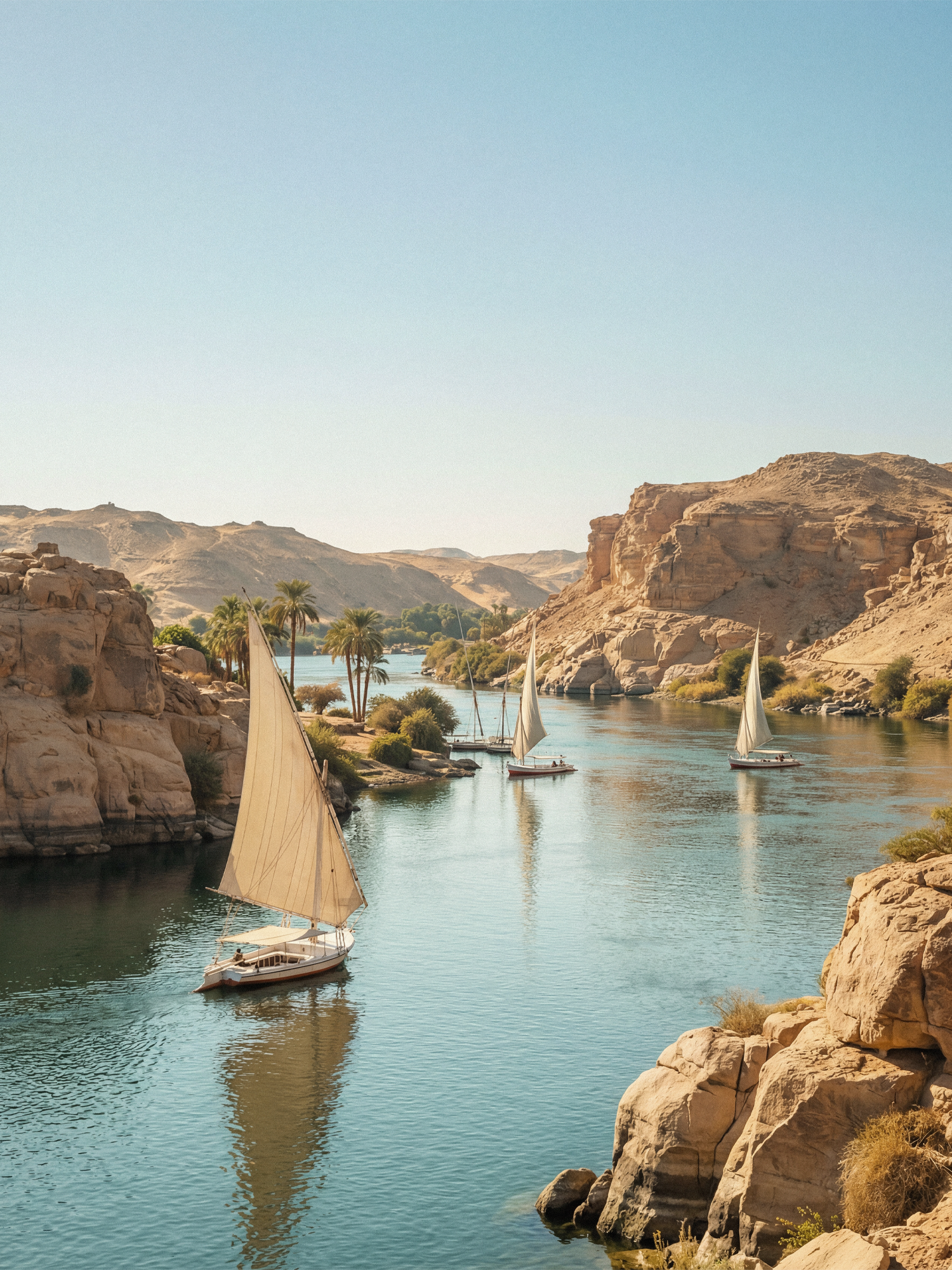
Egypt has a way of making the rest of the world feel young. The streets of Cairo hum with a relentless, living energy. The desert holds secrets older than most civilizations. And between the chaos of the city and the silence of the Nile at dusk, there is a beauty here that rewards those who slow down long enough to notice it. This guide is a carefully chosen collection of places that reflect the Egypt we know and love — timeless, generous, and endlessly surprising. Every place listed here is real, independently chosen, and selected with no agenda beyond helping you see this country at its best.
Experience

Pyramids of Giza
The wonder that earns the name
No photograph prepares you for the scale. The Great Pyramid of Khufu — built around 2560 BCE — rises 138 metres from the plateau, made of an estimated 2.3 million stone blocks. Go at dawn, before the tour groups arrive. Enter one of the pyramids if you can — the narrow passage and burial chamber are unlike anything else on earth. The Sound and Light Show at night transforms the plateau entirely. And before you leave, stop at the Solar Boat Museum beside the Great Pyramid, where a 4,600-year-old cedar vessel was discovered buried whole — intended to carry the pharaoh into the afterlife.

Khan el-Khalili
A medieval souk, six centuries old
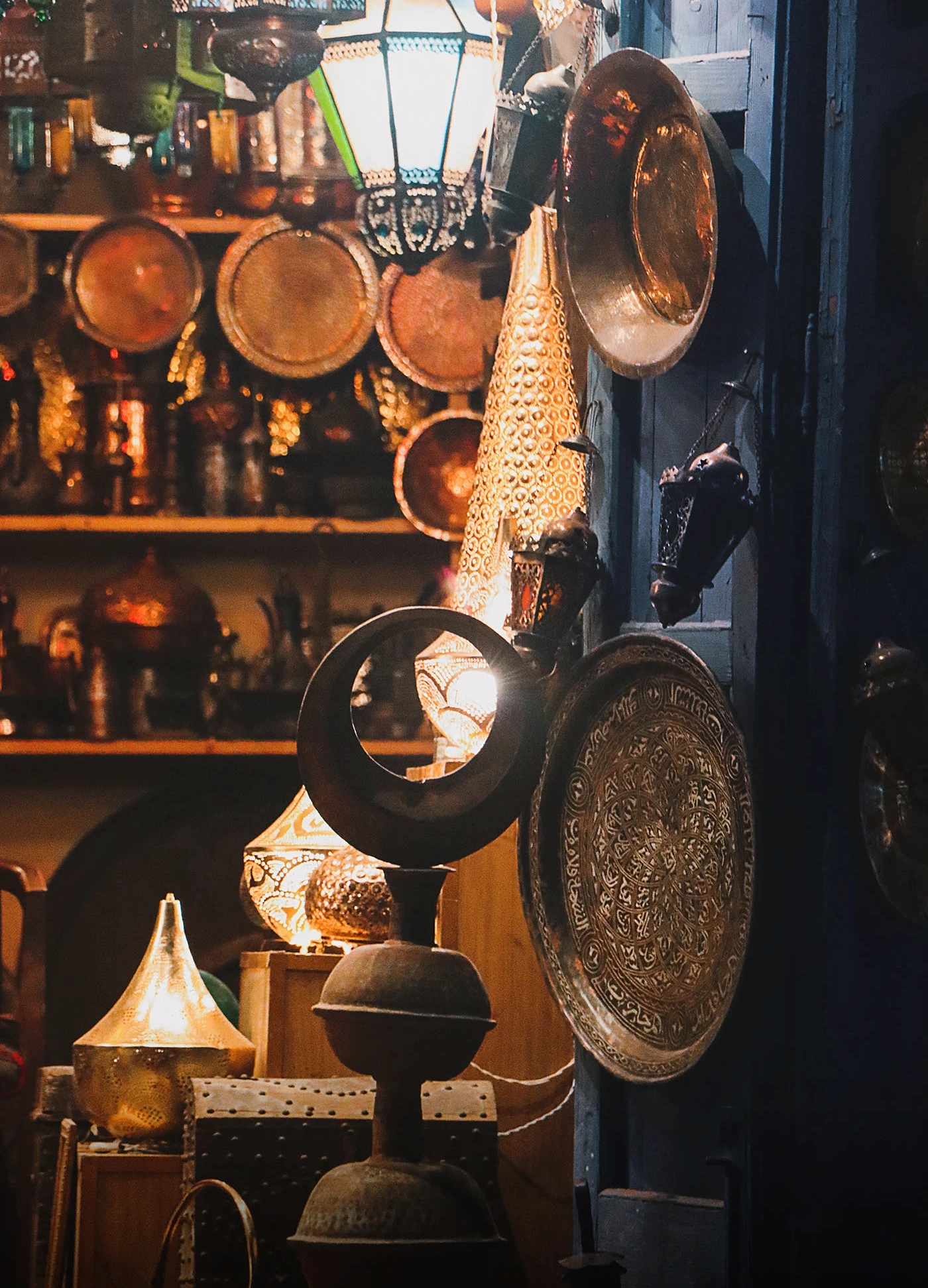
Founded in 1382, Khan el-Khalili has been Cairo's commercial heart for over six centuries. Copper lanterns, raw spices, silver jewellery, and cotton galabeyyas fill hundreds of interconnected lanes beside the Al-Hussein Mosque. Negotiate without embarrassment — it is expected. The surrounding neighbourhood of El-Gamaleya, with its Fatimid-era mosques and medieval gates, is equally worth the wander.

The Egyptian Museum
A third of the world's antiquities. One country.
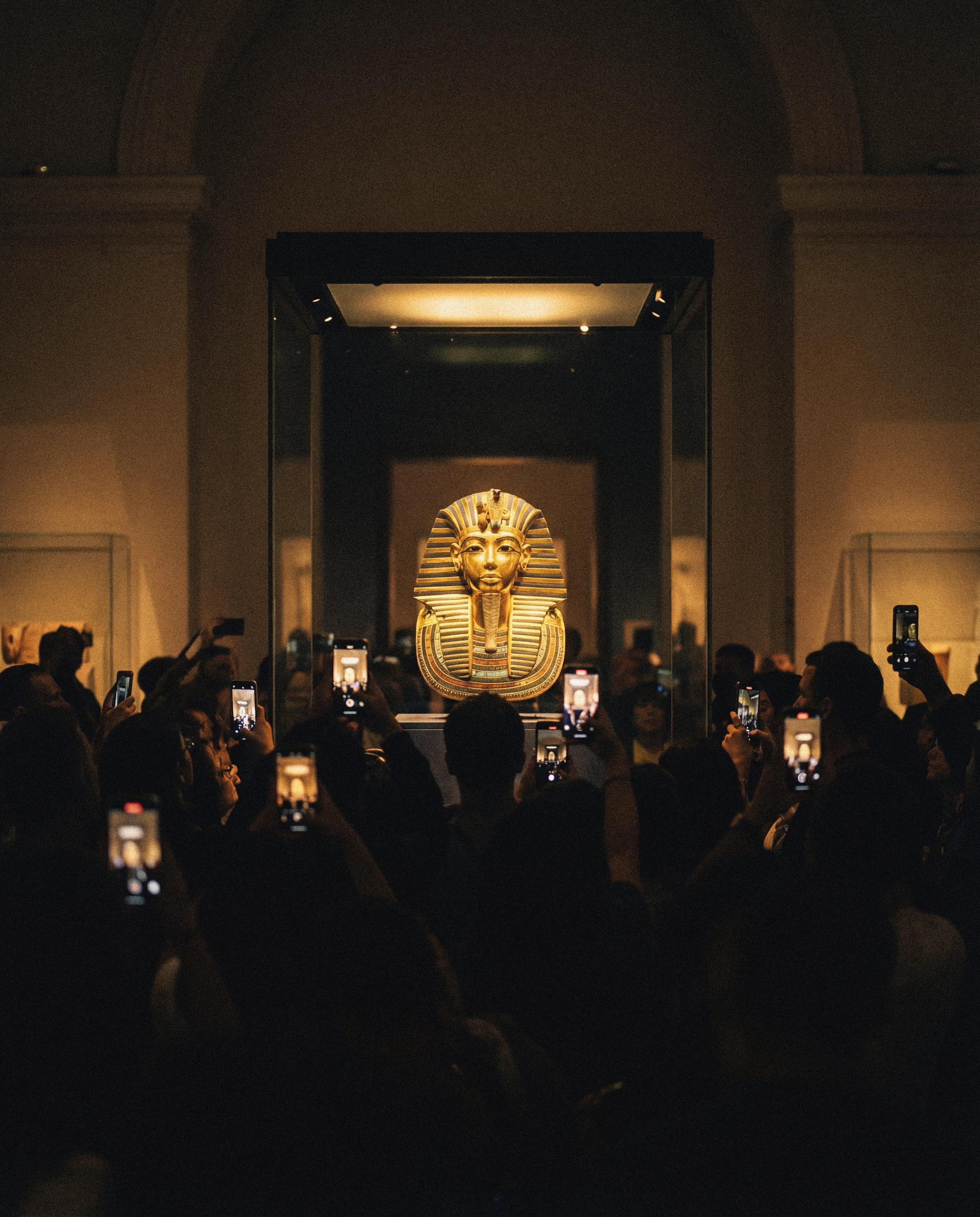
Egypt is home to roughly a third of all the antiquities on earth. The grand pink neoclassical building on Tahrir Square, opened in 1902, remains the heart of that collection — 120,000 objects spanning 5,000 years, including the complete treasures from Tutankhamun's tomb. The Royal Mummies Room holds 22 pharaonic mummies, each extraordinarily preserved. Plan for half a day at minimum.
The Grand Egyptian Museum
Largest archaeological museum on earth
Opened in 2023 beside the Pyramids of Giza, the Grand Egyptian Museum is the most ambitious cultural project Egypt has built in a century. Its collection of over 100,000 objects includes the complete contents of Tutankhamun's tomb — displayed together for the first time in history — as well as colossal royal statues and artefacts moved from museums across the country. The atrium alone, dominated by a 12-metre statue of Ramesses II, is worth the visit. A must.

Luxor & the Valley of the Kings
3,400 years old and still commanding
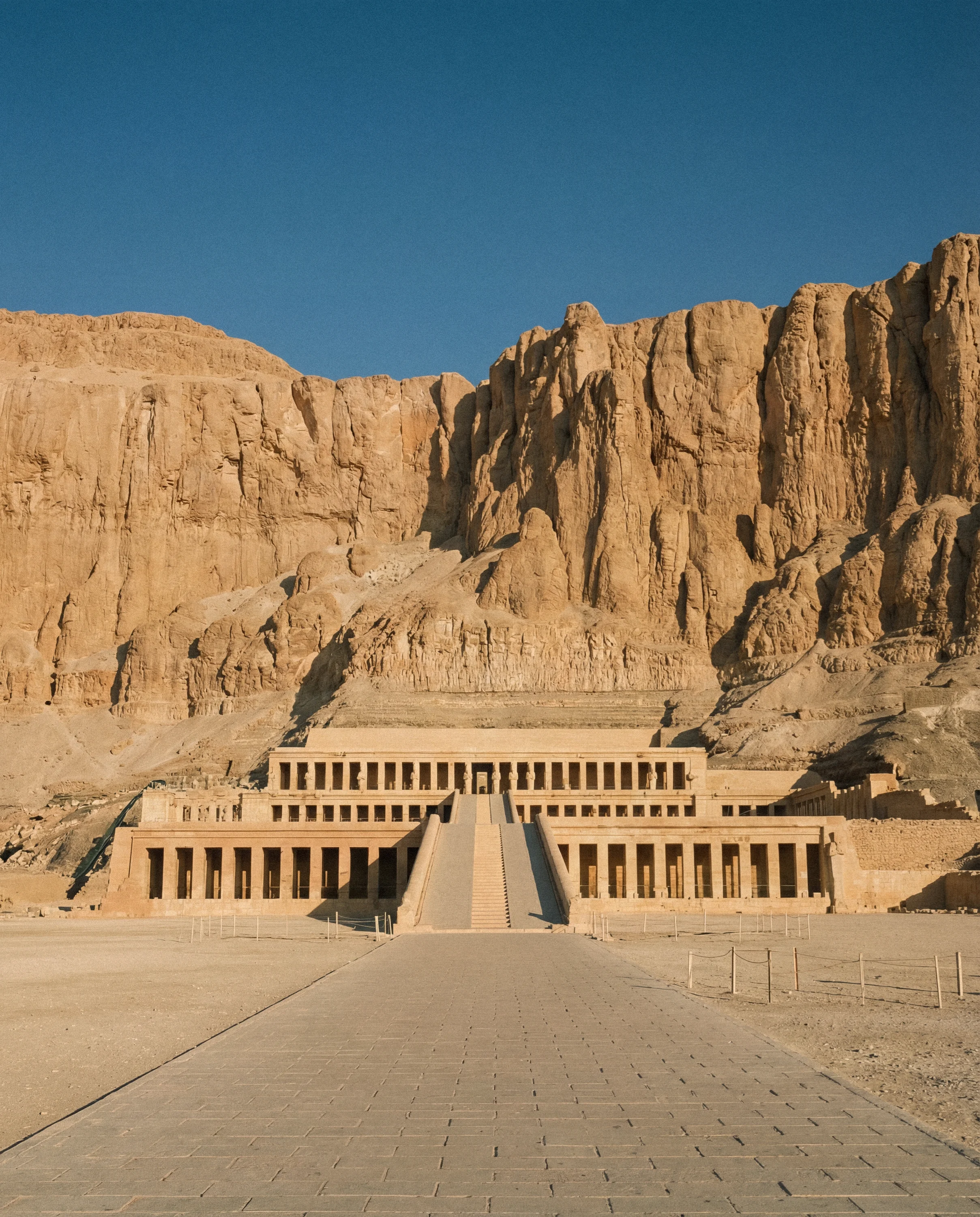
Luxor is Egypt's open-air museum. Luxor Temple, built around 1400 BCE and floodlit at night, is compact enough for a single visit — come at dusk when the colossal statues of Ramesses II glow amber. Across the Nile, the Valley of the Kings holds 63 royal tombs cut into the limestone cliffs, including that of Tutankhamun. Hiring a guide for the West Bank is worthwhile — the painted tomb walls require context to fully understand. Allow two full days for Luxor.

Escape
Sharm El Sheikh
The Red Sea at its most dramatic
At the southern tip of the Sinai Peninsula, where the Gulf of Aqaba meets the Gulf of Suez, Sharm El Sheikh sits beside some of the most biodiverse coral reefs on earth. The underwater world here — reef sharks, manta rays, technicolour coral walls — is accessible to complete beginners and rewards experienced divers equally. Ras Mohammed National Park, 30 minutes south, protects the peninsula's wildest waters. Above the surface, the Sinai mountains at sunset turn shades of pink and copper that no photograph does justice to.


Hurghada
Where the desert meets the Red Sea
Hurghada stretches along the western Red Sea coast and is Egypt's most accessible beach destination from Cairo — three and a half hours by road or a short flight. The reef diving and snorkelling here are excellent, with house reefs reachable directly from the shore at many locations. The islands of Giftun, a short boat ride offshore, offer some of the clearest water in the country. For something quieter, El Gouna — a private lagoon town 30 minutes north — offers a more intimate version of the Red Sea experience.
Dahab & The Blue Hole
The most beautiful dive site on earth
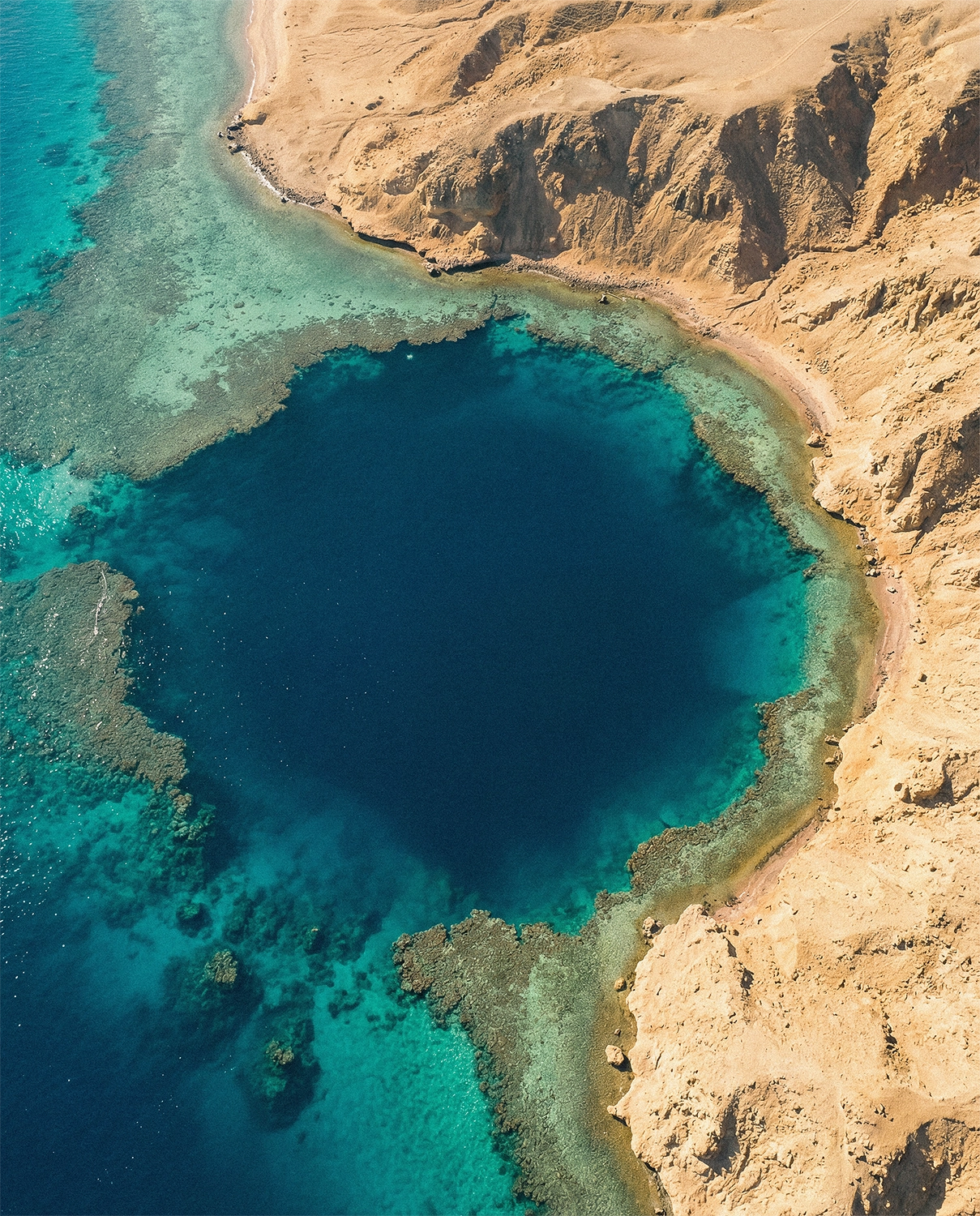
Dahab sits on the Gulf of Aqaba in the southern Sinai — a small, unhurried town that has been drawing divers and free divers for decades. The Blue Hole, ten minutes north by road, is a 130-metre vertical shaft in the reef, ringed by coral walls that drop into deep blue nothing. Snorkellers can float above it; divers descend its walls. The town itself, built around a bay lined with low tables and cushions, is one of the most relaxed places in Egypt. Come for a few days. You will stay longer.
Siwa Oasis
The oasis at the edge of the world
Six hours west of Cairo, deep in the Libyan Desert, Siwa is one of the most remote and beautiful places in Egypt. The oasis is fed by over 300 freshwater springs, surrounded by date palms, olive groves, and salt lakes that turn pink at dusk. The Oracle Temple of Amun, where Alexander the Great came to be declared a god in 331 BCE, still stands at the edge of the old city. The local Siwi Berber culture, language, and craftsmanship are unlike anything found elsewhere in Egypt. Stay in one of the mud-built eco-lodges and leave the rest of the world behind.
Eat & Drink
Abou El Sid
Traditional Egyptian cooking
Set inside a beautifully restored Zamalek apartment filled with antique mirrors and brass lanterns, Abou El Sid has been serving Egyptian classics since 1999. The molokhia — slow-cooked jute leaf soup — is deeply flavoured. The hamam mahshi, stuffed pigeon, is a Cairo delicacy. Reservations essential on weekends.

Koshary Abou Tarek
Egypt's national dish
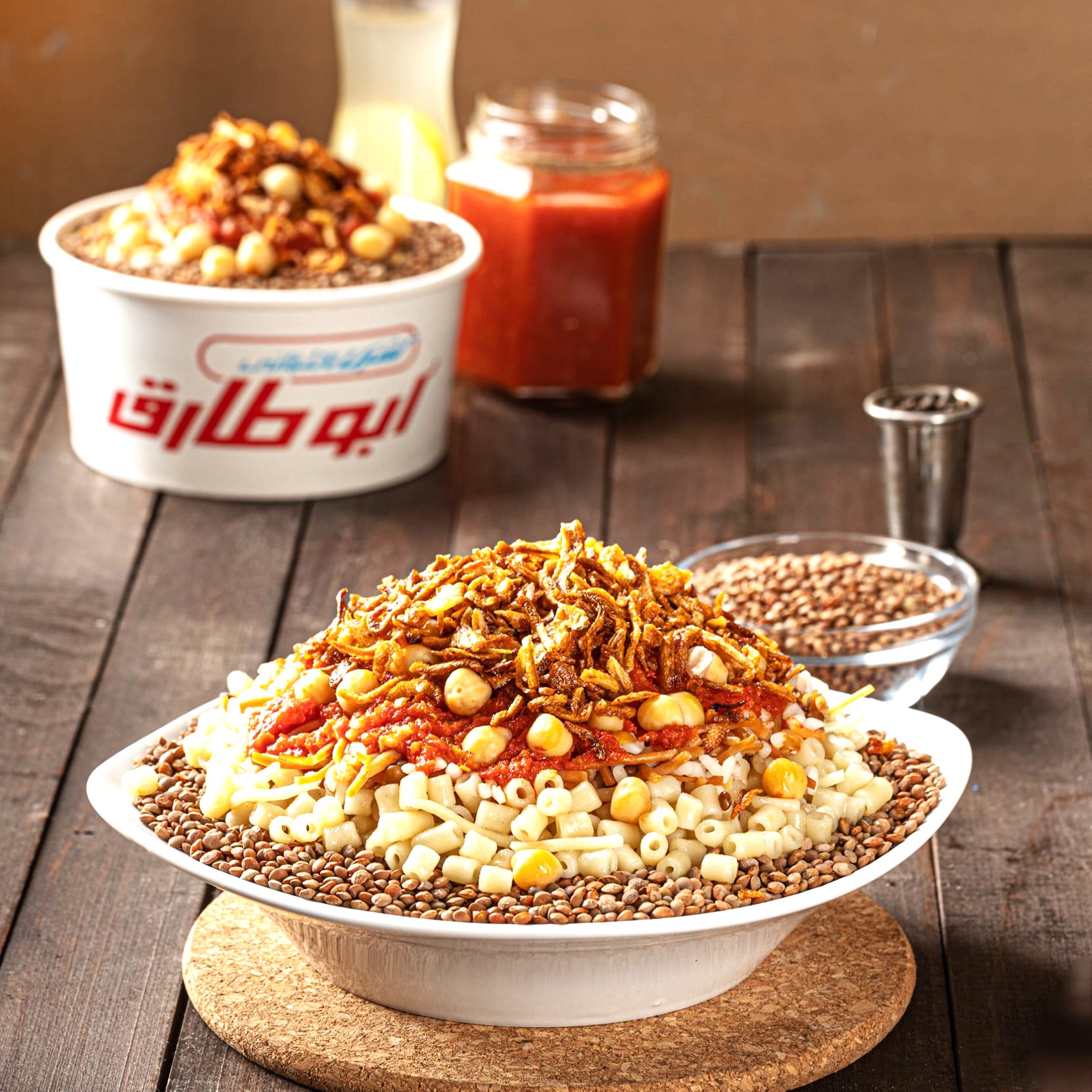
Rice, lentils, macaroni, crispy onions, tomato sauce, spiced vinegar — koshary is Cairo's great street food. Abou Tarek, open since 1950, is the most celebrated address for it in Egypt. Order a large. Finish with a cold glass of karkadeh — hibiscus — sharper and more refreshing here than anywhere else.
The Oriental Breakfast
The meal Cairo was built around
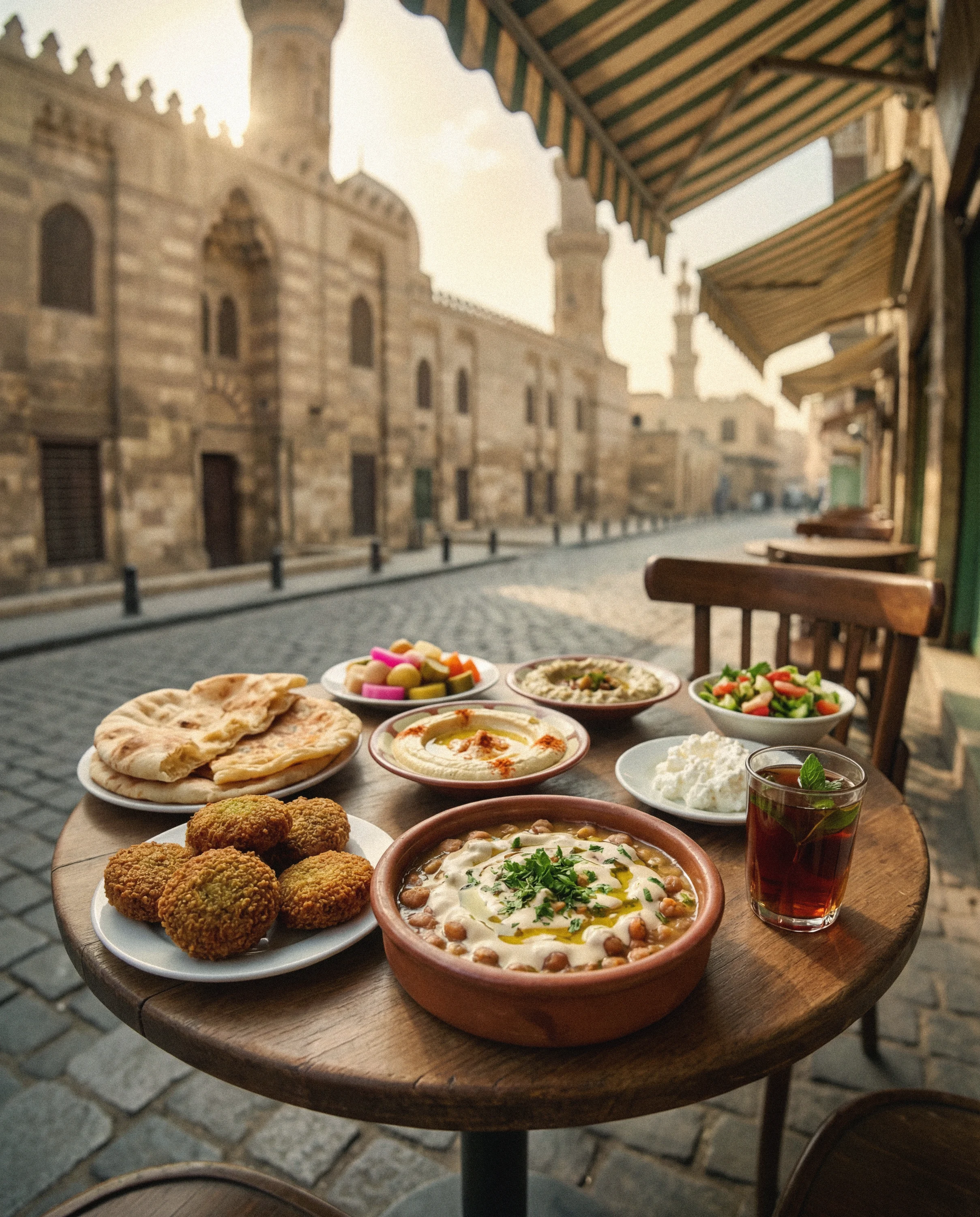
Foul — slow-cooked fava beans with cumin, lemon, and olive oil — is the foundation of the Egyptian morning. Beside it: ta'meya, the local falafel made from fava rather than chickpeas, crisper and greener than anything you will find elsewhere. Add a tray of fried potatoes, fresh tomatoes, pickled vegetables, and baladi bread still warm from the oven. Any local fuul cart does this better than most restaurants. Ask where the neighbourhood goes at 7am — that is your answer.
El-Fishawi Café
Open since 1773
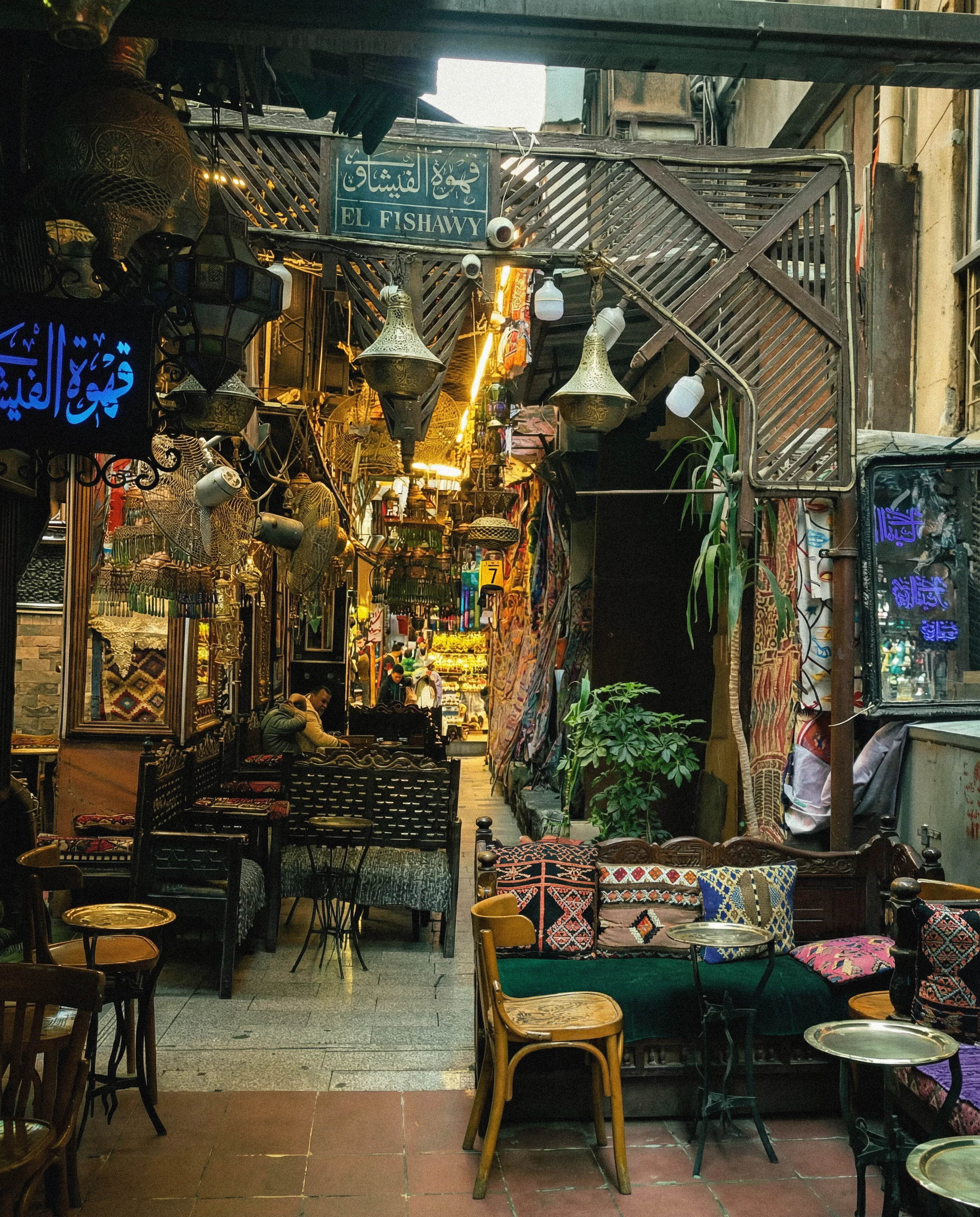
Tucked into a narrow alley in Khan el-Khalili, El-Fishawi has been open almost continuously since 1773. Antique mirrors, stacked brass trays, chairs worn smooth by generations. The menu — mint tea, Turkish coffee, shisha — needs no revision. Order shay bi nana and let the souk noise wash over you. There is no better place in Cairo to simply sit.
Shop
Nomad Gallery
Contemporary Egyptian craft
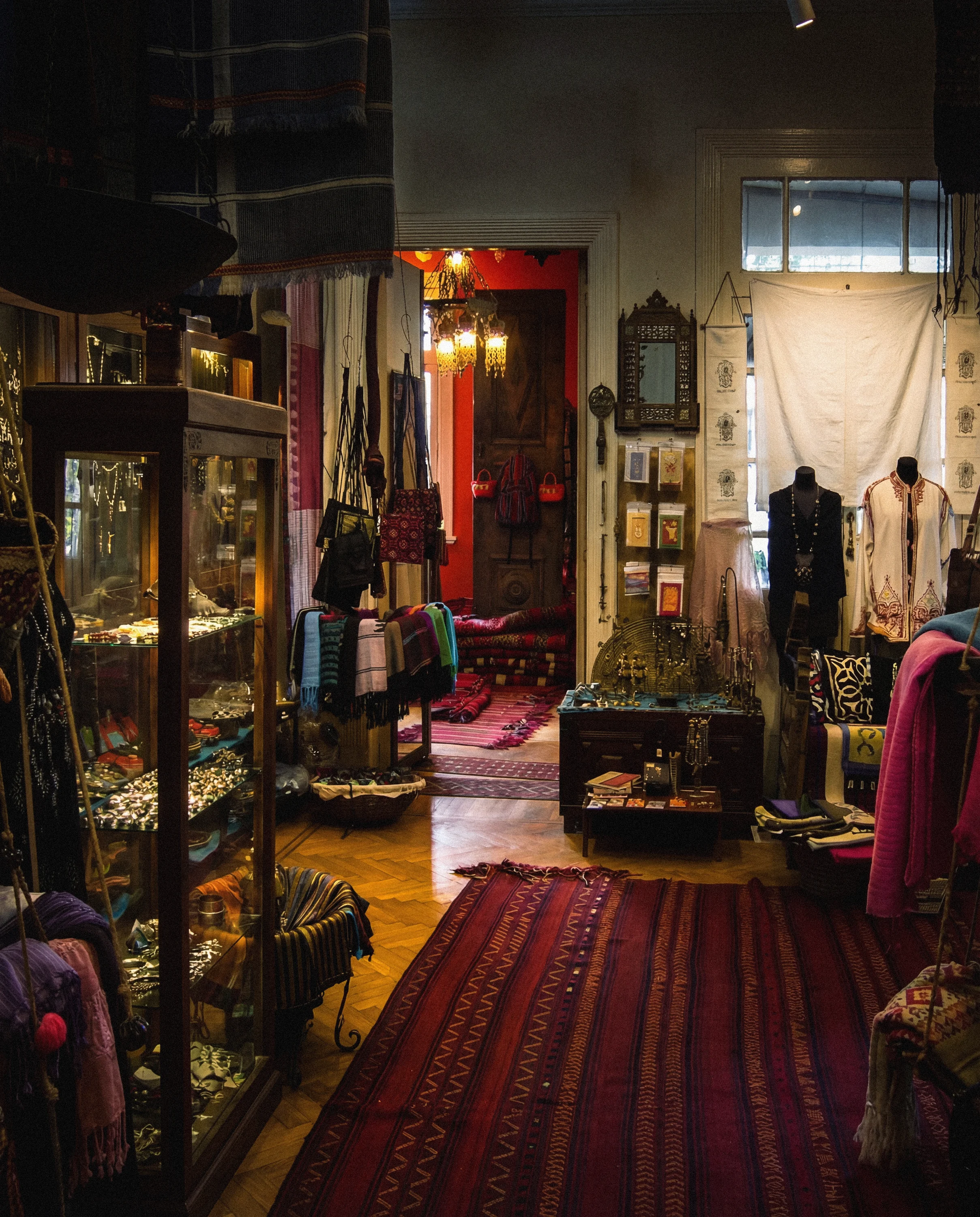
On a quiet street in Zamalek, Nomad works directly with artisan communities across Egypt — weavers in Upper Egypt, potters in Fayoum, silver jewellers in Aswan. Nothing is mass-produced. The kilim rugs, ceramic vessels, and jewellery all carry a provenance. The most thoughtful craft shopping in Cairo.
Al-Muizz Street
The most beautiful street in Islamic Cairo
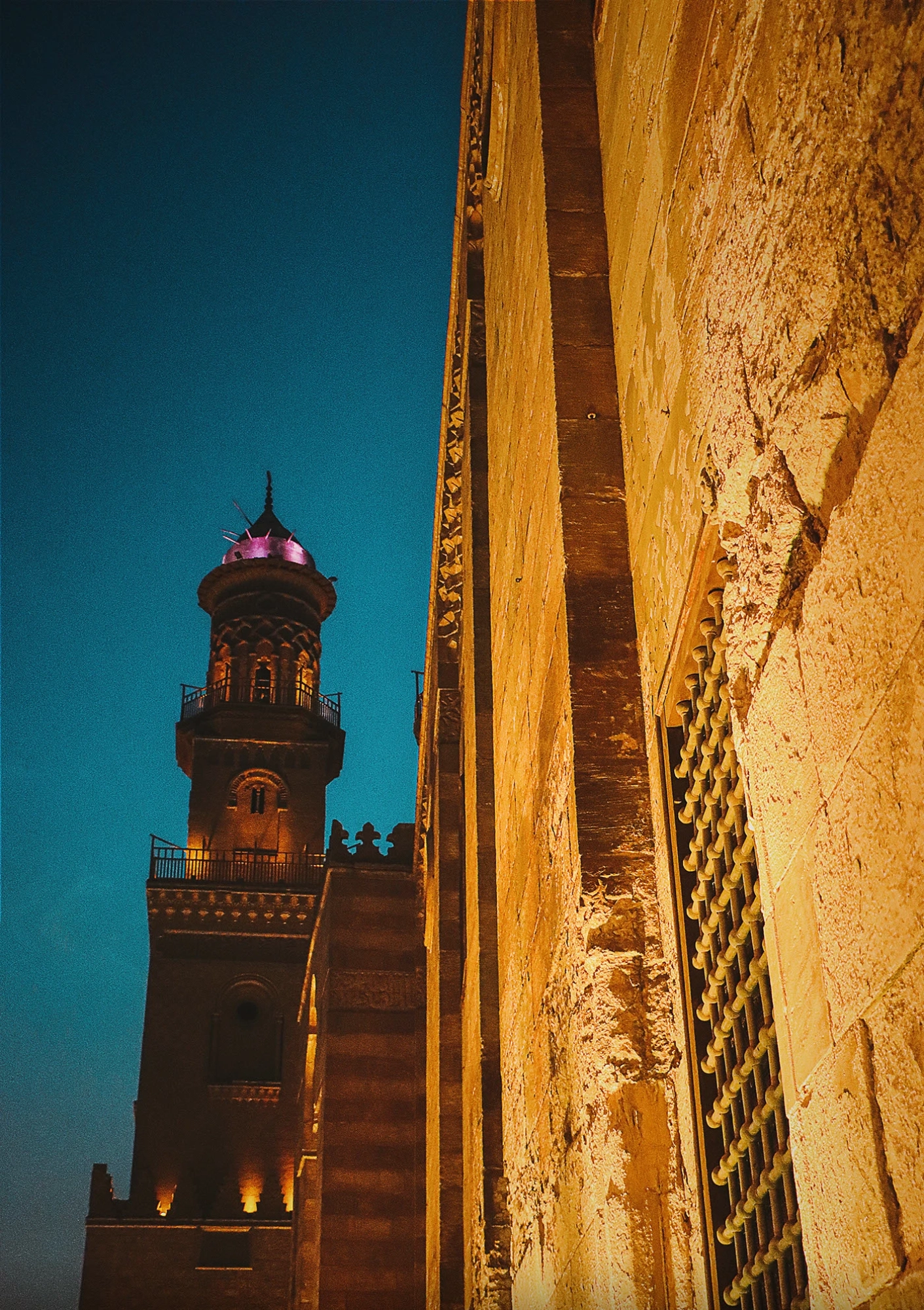
Stretching through medieval Cairo, Al-Muizz li-Din Allah Street is one of the oldest inhabited streets in the world. Its two kilometres are lined with Fatimid, Mamluk, and Ottoman architecture — carved stone facades and covered bazaar passages unchanged for centuries. At night, closed to traffic and lit by lanterns, it becomes something extraordinary. Antique dealers, perfume sellers, hand-hammered copper and silver. The Khan el-Khalili bazaar flows directly from its southern end.
Stay
Marriott Mena House
At the foot of the Pyramids, since 1869
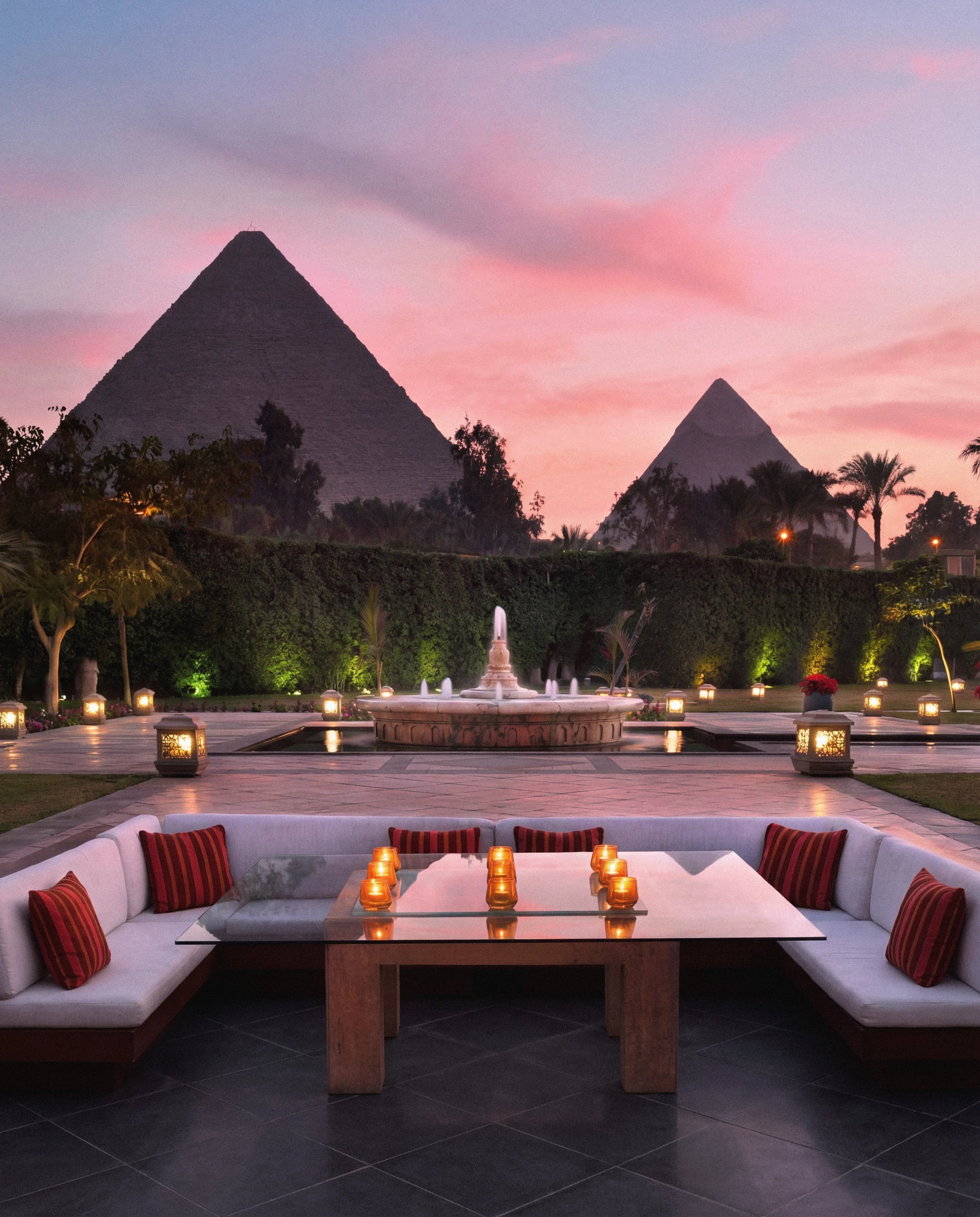
Built in 1869 as a royal hunting lodge, Mena House is the oldest hotel in Egypt. The palace wing — mashrabiya screens, Moorish plasterwork, gardens leading to the plateau — remains its most atmospheric accommodation. The swimming pool looks directly at the Great Pyramid. Churchill and Roosevelt held their 1943 Cairo Conference here.
Four Seasons Nile Plaza
Contemporary luxury on the Nile
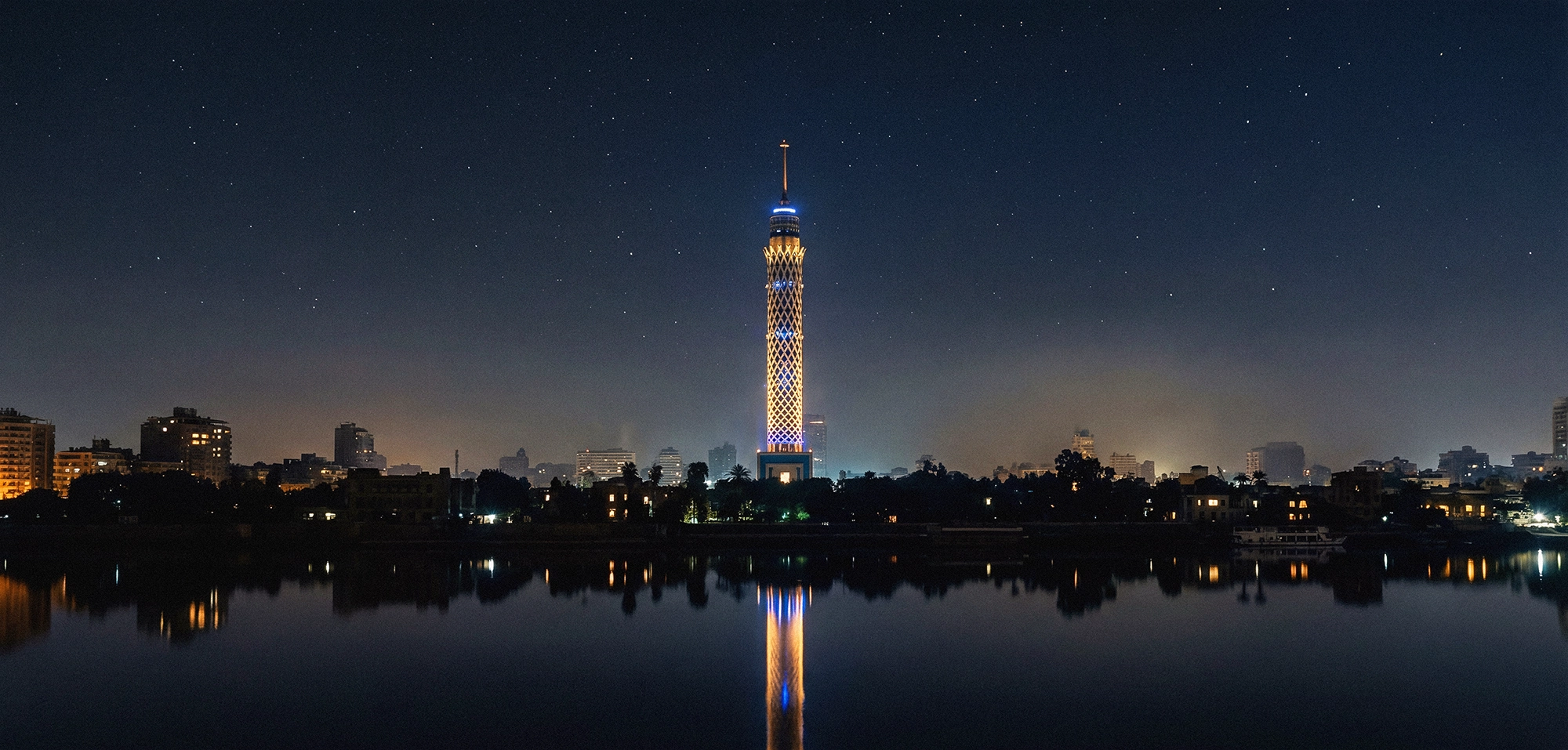
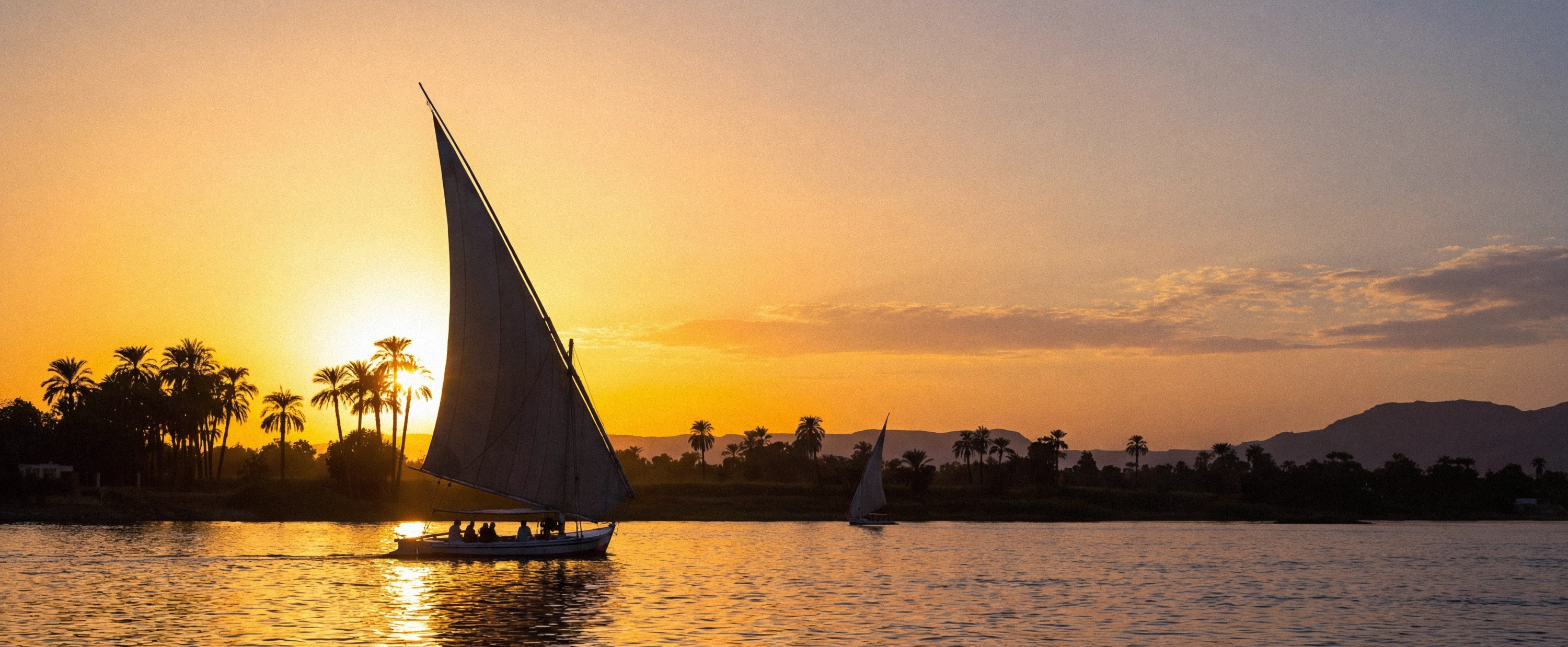
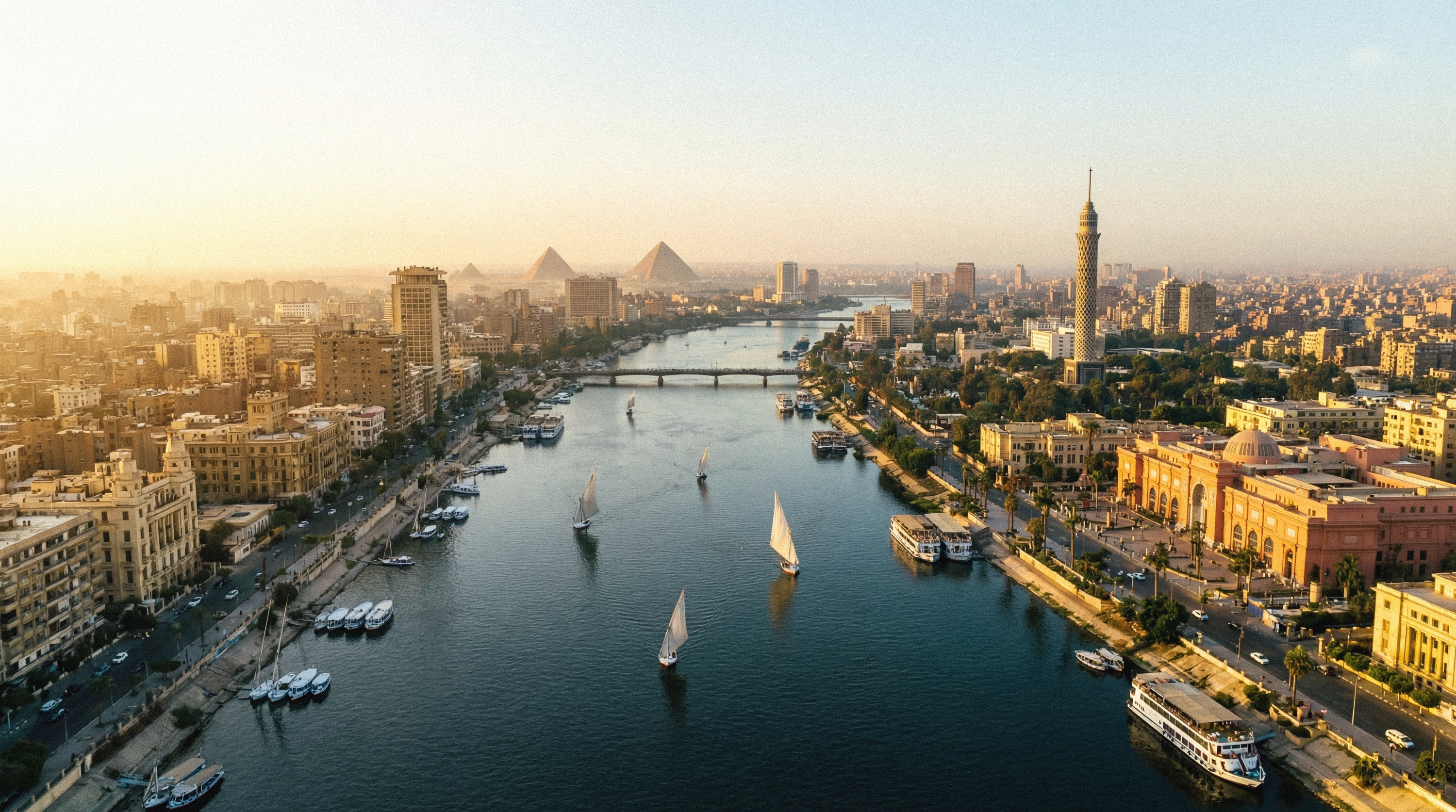
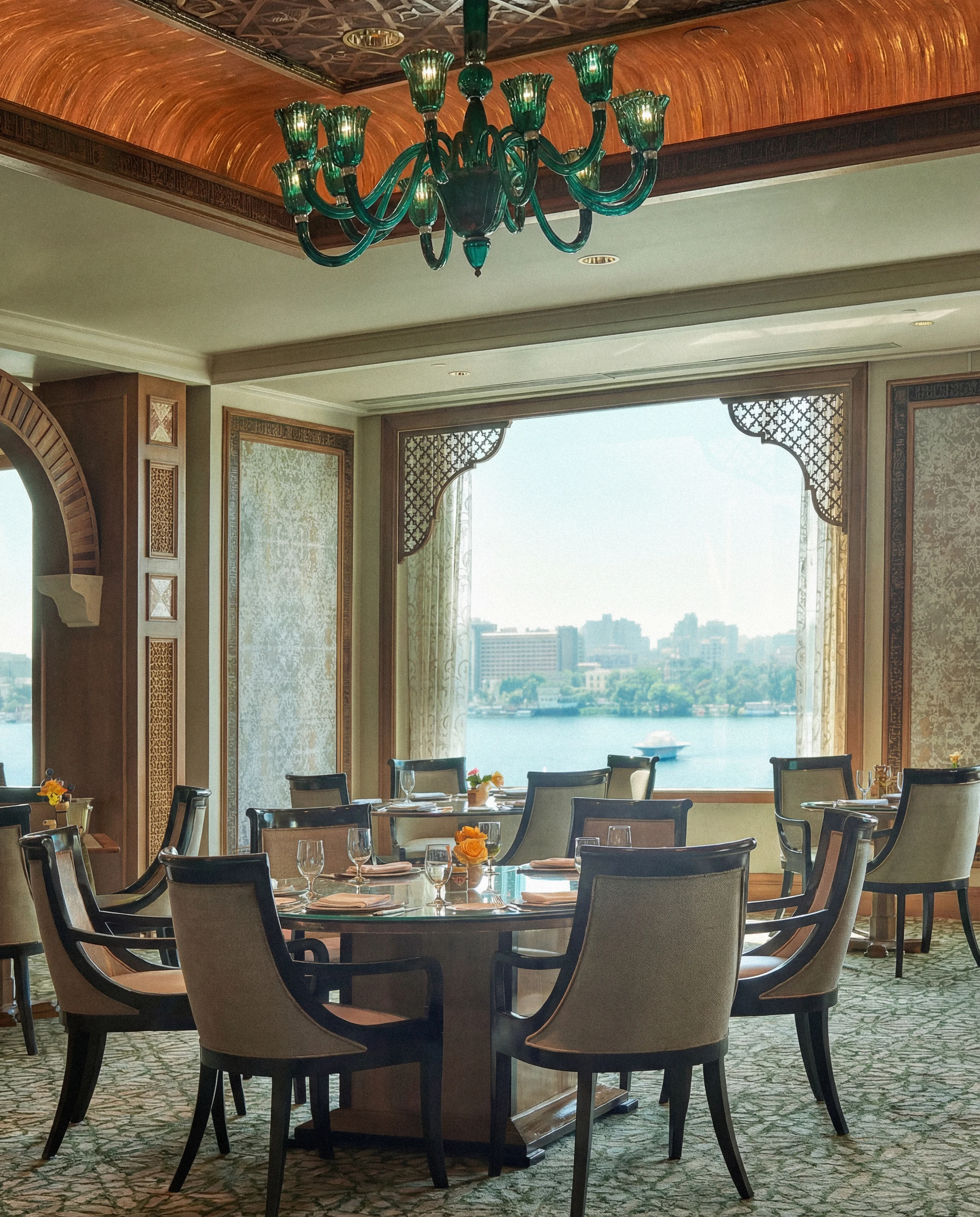
The Four Seasons Nile Plaza offers some of the finest Nile-facing rooms in Cairo, centrally positioned between downtown, Zamalek, and Tahrir Square. The rooftop terrace at dusk — feluccas below, last light on the Muqattam Hills — is one of the great Cairo views. The spa is worth a visit in its own right.
Guide Map
All the places in this guide are saved and detailed on the map to make your trip easier.
View Map